Turkmenbashi: Behind the Curtain
Turkmenbashi, Turkmenistan - June, 2026
I am a naturally curious person, so I spent a lot of the drive from Ashgabat to Turkmenbashi asking my guide questions, trying to get a full sense of what life is actually like inside the reclusive country. Turkmenistan has a long list of topics that are off limits or politically sensitive, and I found several of those edges without really trying. More than once there was visible discomfort about what we discussed and where, especially anything touching on the current president, elections, the first president, exchange rates, or government restrictions in general. It is clear this is not a place where any subject can be discussed freely, and there is a real undercurrent of mistrust about who might be listening and what they might do with it. Some of that is a legacy of the Soviet system, which was extraordinarily hierarchical and depended on people policing each other.
On the way to Turkmenbashi, we crossed a large stretch of the country and stopped a few times along the way. First was Kow-Ata, a cave hot spring, then a mosque built to commemorate the Battle of Geok-Tepe, a name I hadn't heard before that trip. In 1881, an Imperial Russian force under General Mikhail Skobelev laid siege to the Turkmen fortress there for over three weeks before finally breaching the wall with a tunnel and a mine, and the assault that followed effectively ended organized Turkmen resistance to Russian expansion into the region. From there, Russian and Soviet control held until 1991, so the mosque marking that battle also marks the beginning of over a century of outside rule. From there, the drive continued through the whole of the Balkan province, crossing long stretches of hot, empty land (a far cry from the manicured, marble-lined avenues of Ashgabat) before finally reaching Turkmenbashi, a town set against the Caspian Sea and backed by mountains.
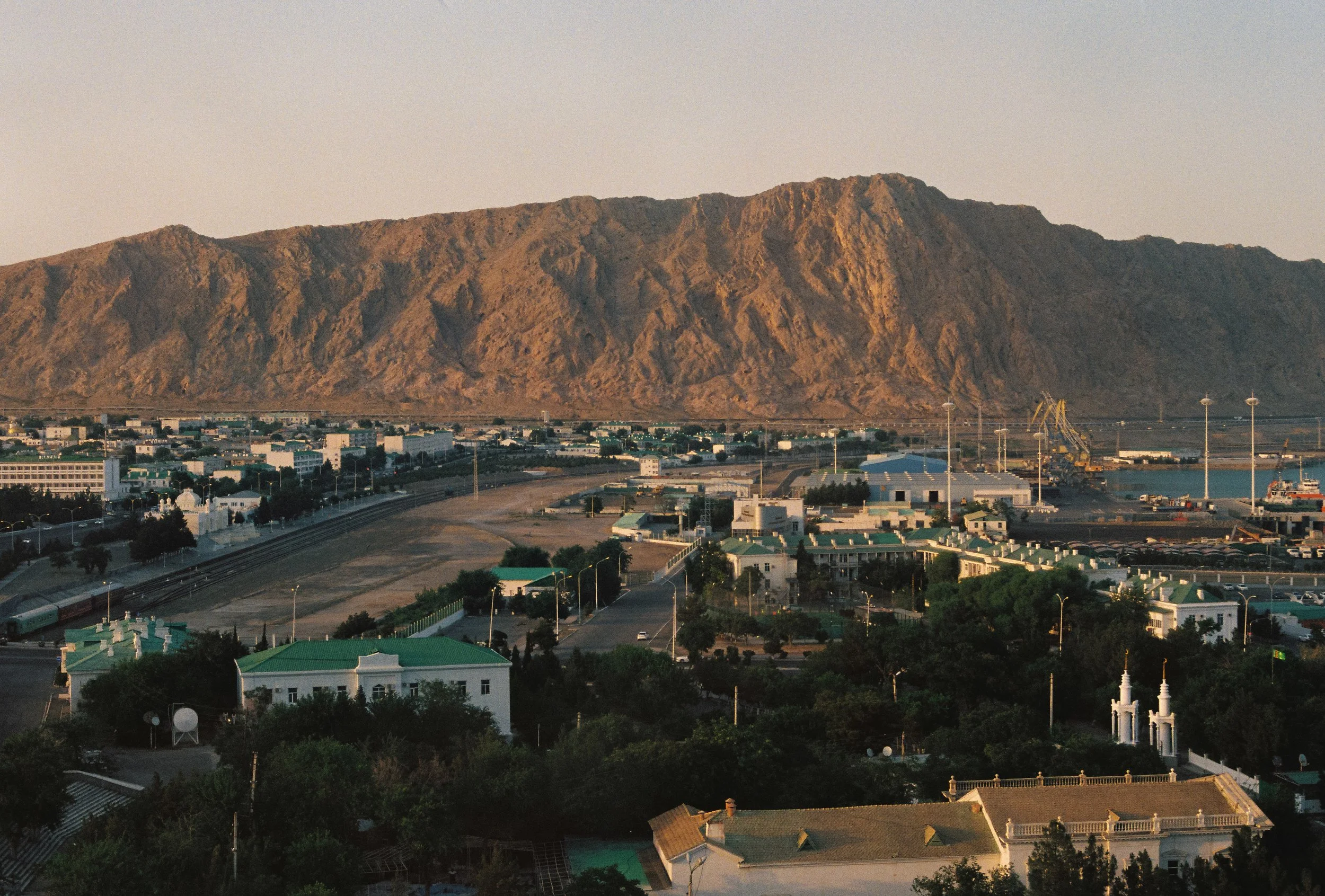
"Beautiful scenery, kind people... but behind it all is a government who refuses to act to help its own citizens.”
Left: Turkmenbashi at sunset
Being on the coast, and having once been the city that surrendered to and cooperated with the invading Russians, Turkmenbashi turned out to be the most liberal and Western feeling place I found in the country. It is by no means liberal or Western by our standards, but there were more ethnically Russian looking people there and the government presence was certainly lower than in Ashgabat. There has also been very little new construction here outside of industrial buildings, so the city still wears its Soviet and Imperial Russian architecture openly. The old Russian name, Krasnovodsk, still shows up on Soviet era monuments and at the rail station, and the older houses are still built in a pre-Soviet, imperial style. The city was originally founded as a Russian fort in 1869, and it wasn't renamed Turkmenbashi, meaning head of the Turkmens, until 1993, when the country's first president had it renamed after his own self given title. Today the city's real purpose is as Turkmenistan's main outlet to the sea and its hub for oil and gas export, with a refinery and petrochemical plants feeding off nearby fields, and I was a little surprised at how many foreign oil companies actually keep offices there.
In the evening, my guide went back to Ashgabat and I went into town for a solo walk. My guide was apprehensive about this, but I decided that this was the only way I would see the real side of things. Thankfully, although I probably won’t be mistaken for a local, I fit in enough not to draw too much attention. I walked along the coast to see some of the town’s main buildings, and even had an uncomfortable encounter with a cop (who must have been at least two years younger than me and asked my name and checked if I was drunk).
I also walked through some old housing complexes in the residential district (below), and saw more of what I suspect most of Turkmenistan is actually like. Surely, there are less developed places in the world than Turkmenistan, but the contrast of going from Ashgabat to this was really shocking. Just beyond the main drives of town, the roads are barely paved, children play outside crumbling concrete housing blocks, and access to basic services is unreliable. I could not help but think the money for even one of Ashgabat’s many fifty million dollar monuments could have been spared to improve the lives of people outside the capital.
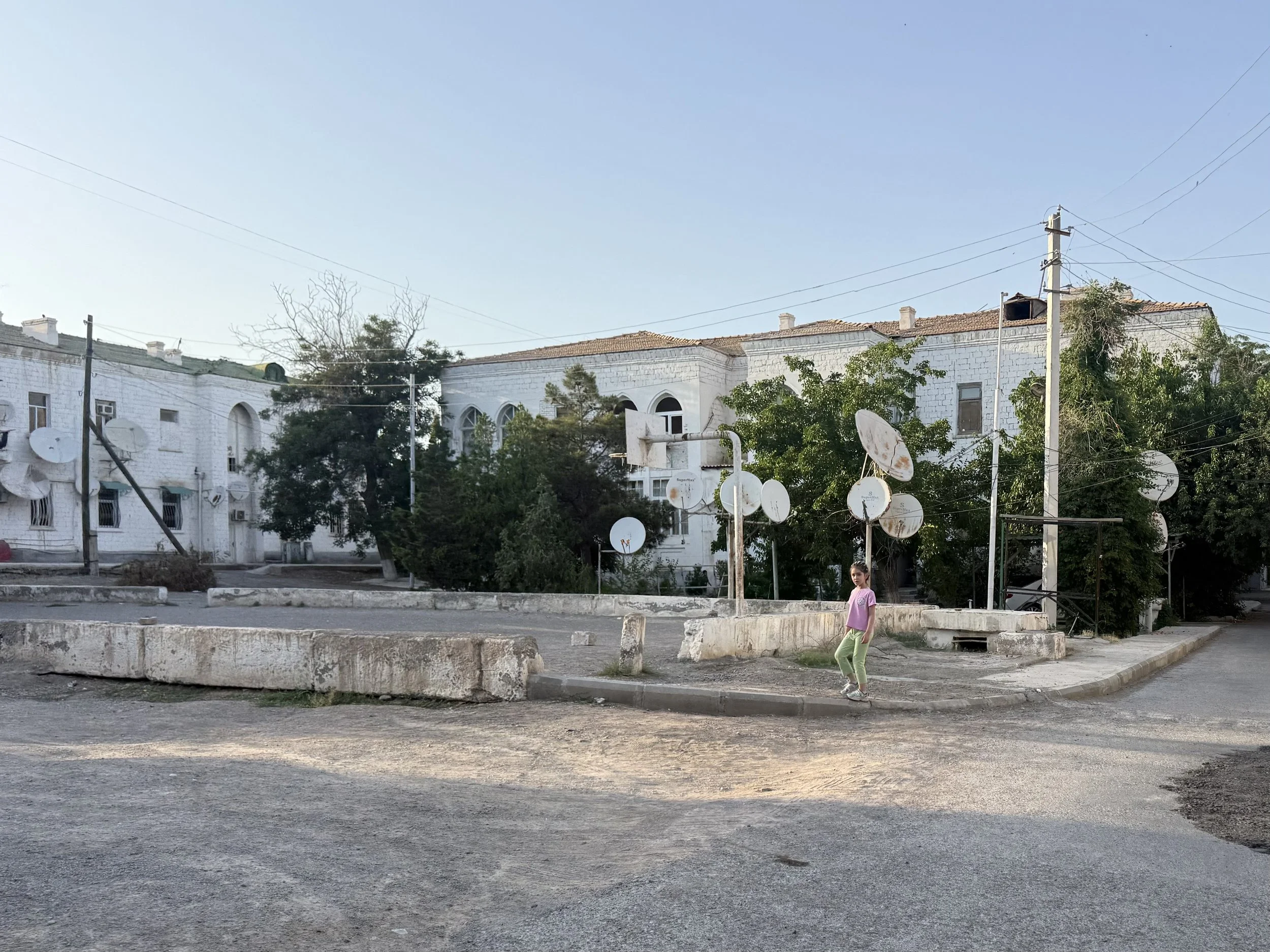
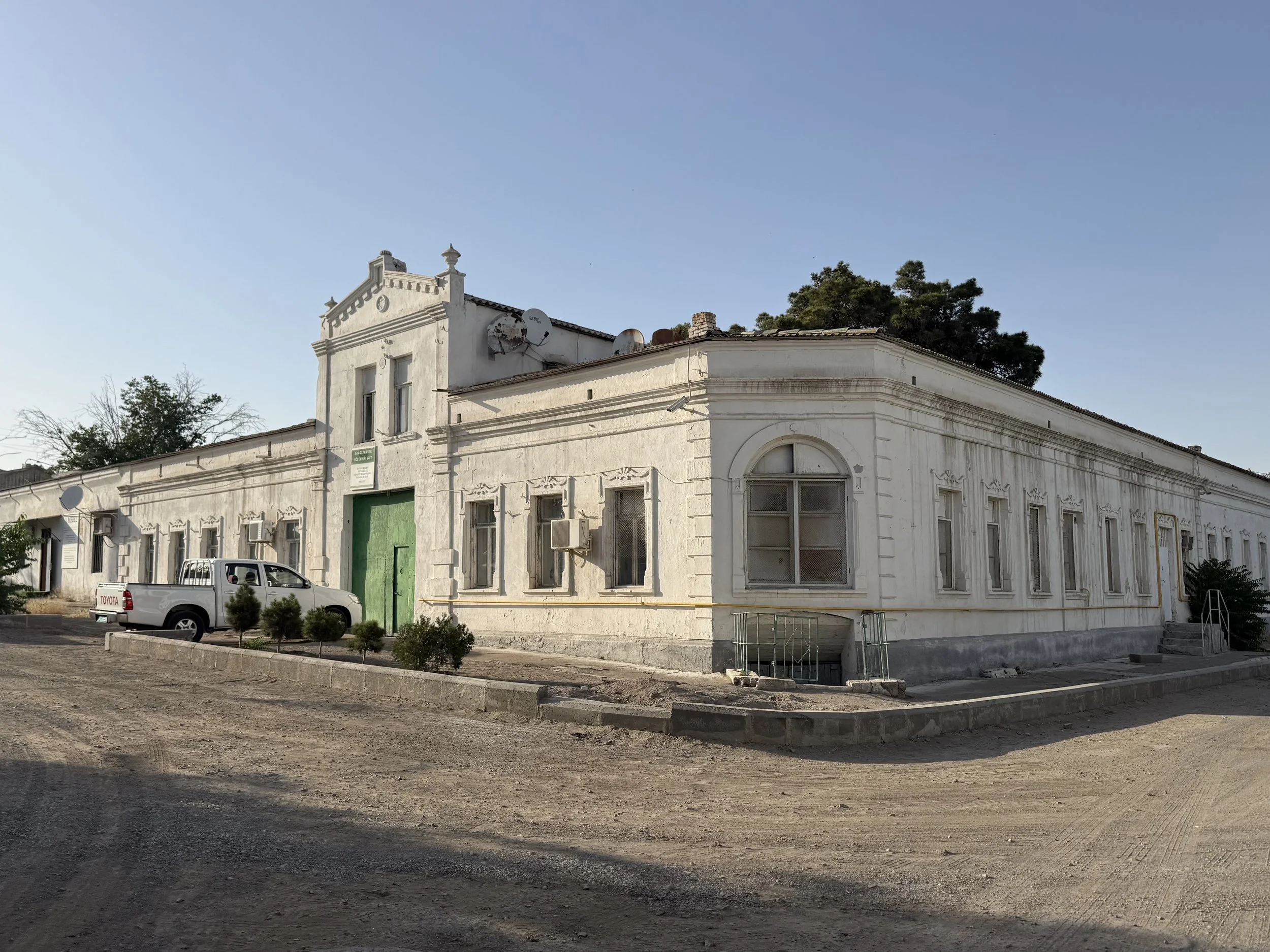
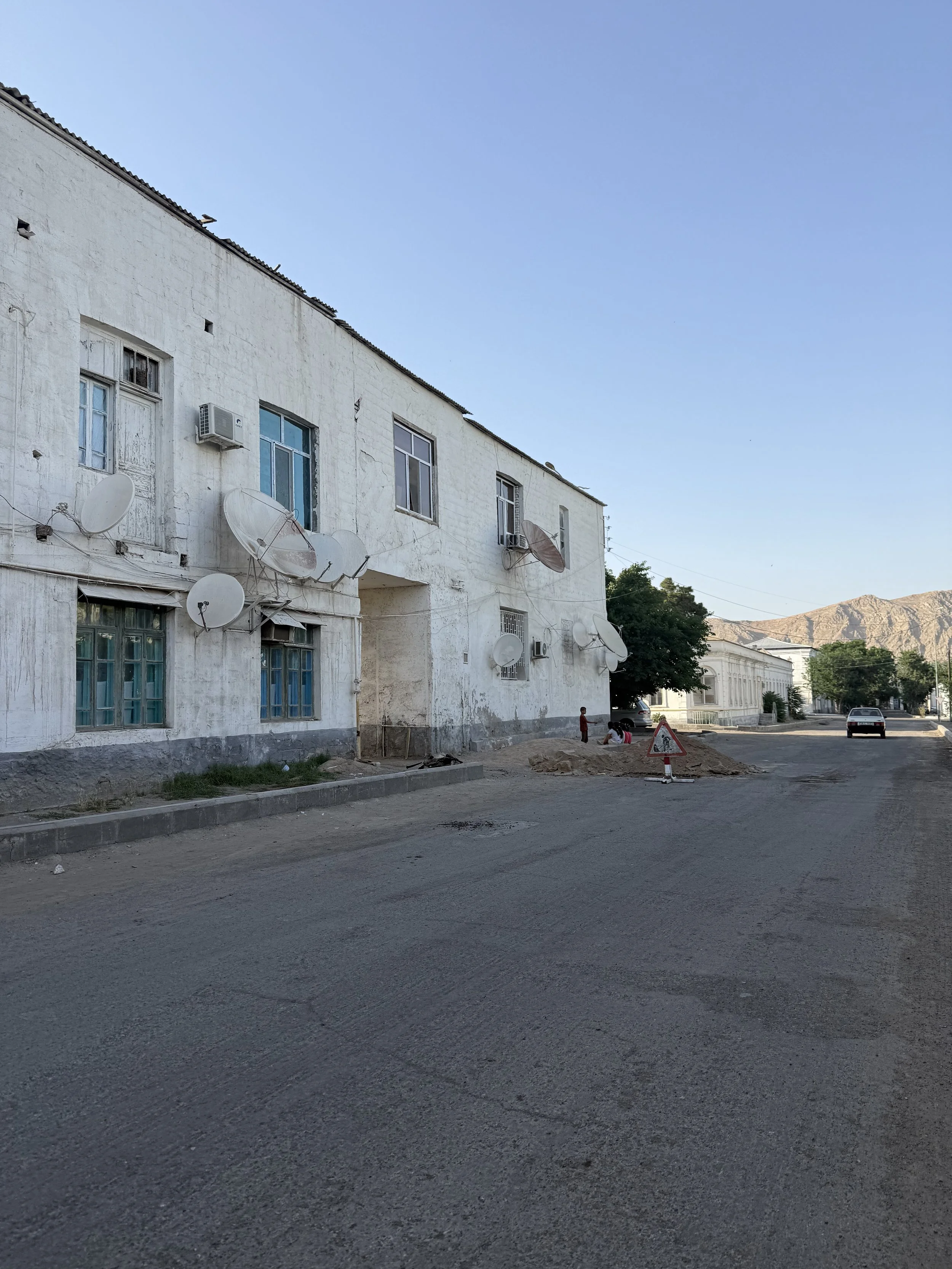
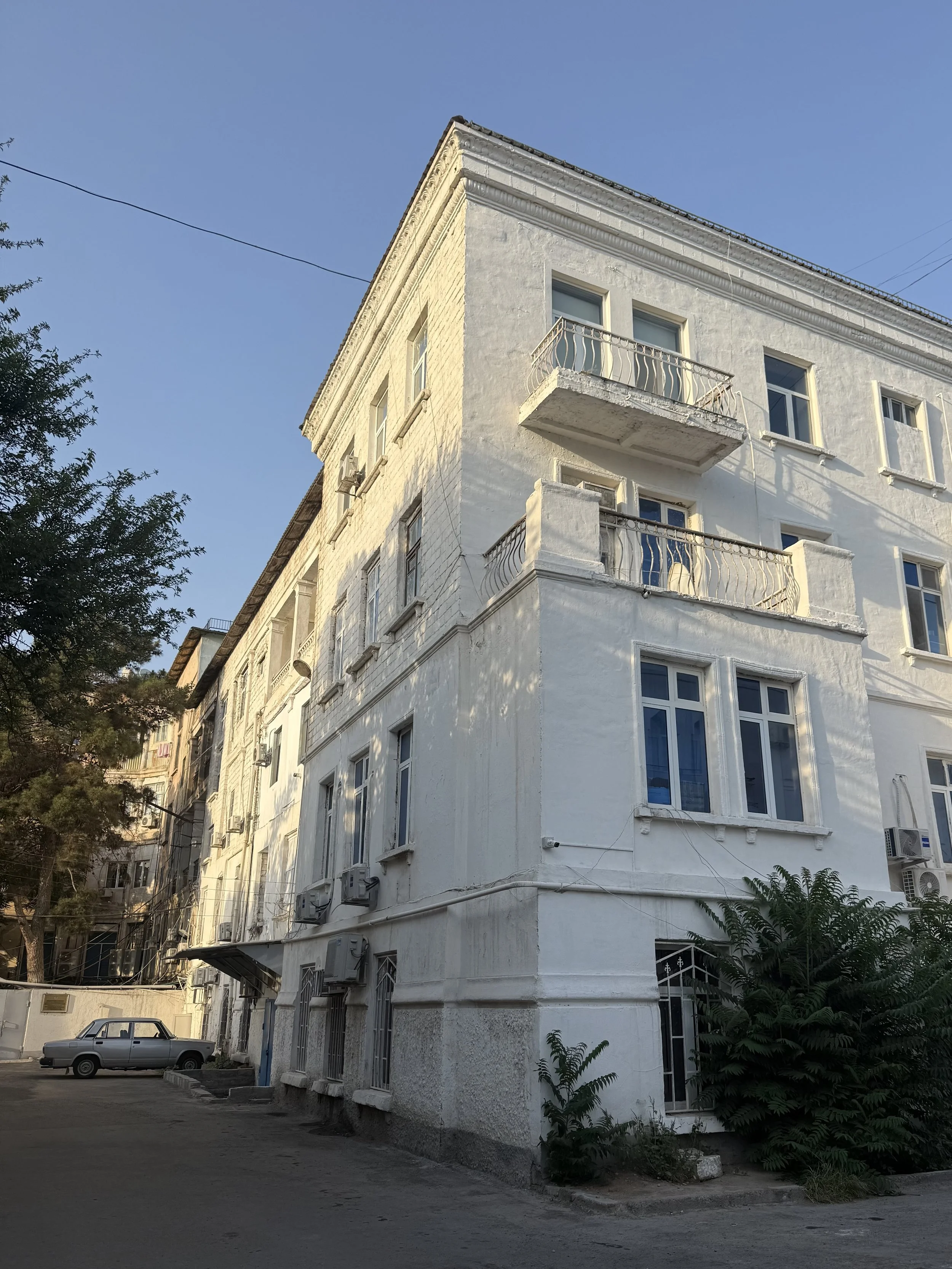
Being in Turkmenbashi was one of the more fascinating parts of the whole trip, because it felt like seeing the real face of the country for once. Beautiful scenery, kind people, and even nice restaurants and entertainment. But behind it all is a government who refuses to act to help its own citizens. In Turkmenbashi, all of the country’s wealth literally flows through the streets of the town to Russia, Europe, and the US, never to return to its own citizens. Given all this, its not hard to see why someone here might have nostalgia for the Soviet times.
In the morning I prepared my things and departed at 6:00 AM for the remote border with Kazakhstan. The drive to the border was again on terrible roads, and took nearly four hours. The crossing itself involved the normal formalities and I was the only tourist in sight. On the way to the border, the landscape was desolate, with salt flats, camels, and harsh desert, for mile after mile. The occasional truck stop or village reminded us that people do actually live in this area, and allowed us a coffee and snack before crossing into Kazakhstan. Upon entering Kazakhstan, my phone began to buzz, reunited with the outside world once more.
If you go:
Expect a guide and driver to be suggested for you and be prepared to push back gently if you want time alone
Turkmenbashi feels more relaxed than Ashgabat but avoid activities which could arouse suspicion and carry your passport
Pay attention to the Imperial Russian architecture, a rarity in Central Asia these days
Do not expect the same level of internet connection and general amenities as in Ashgabat
