Ashgabat: A City Built on Marble, and the One Behind It
Ashgabat, Turkmenistan - June 2026
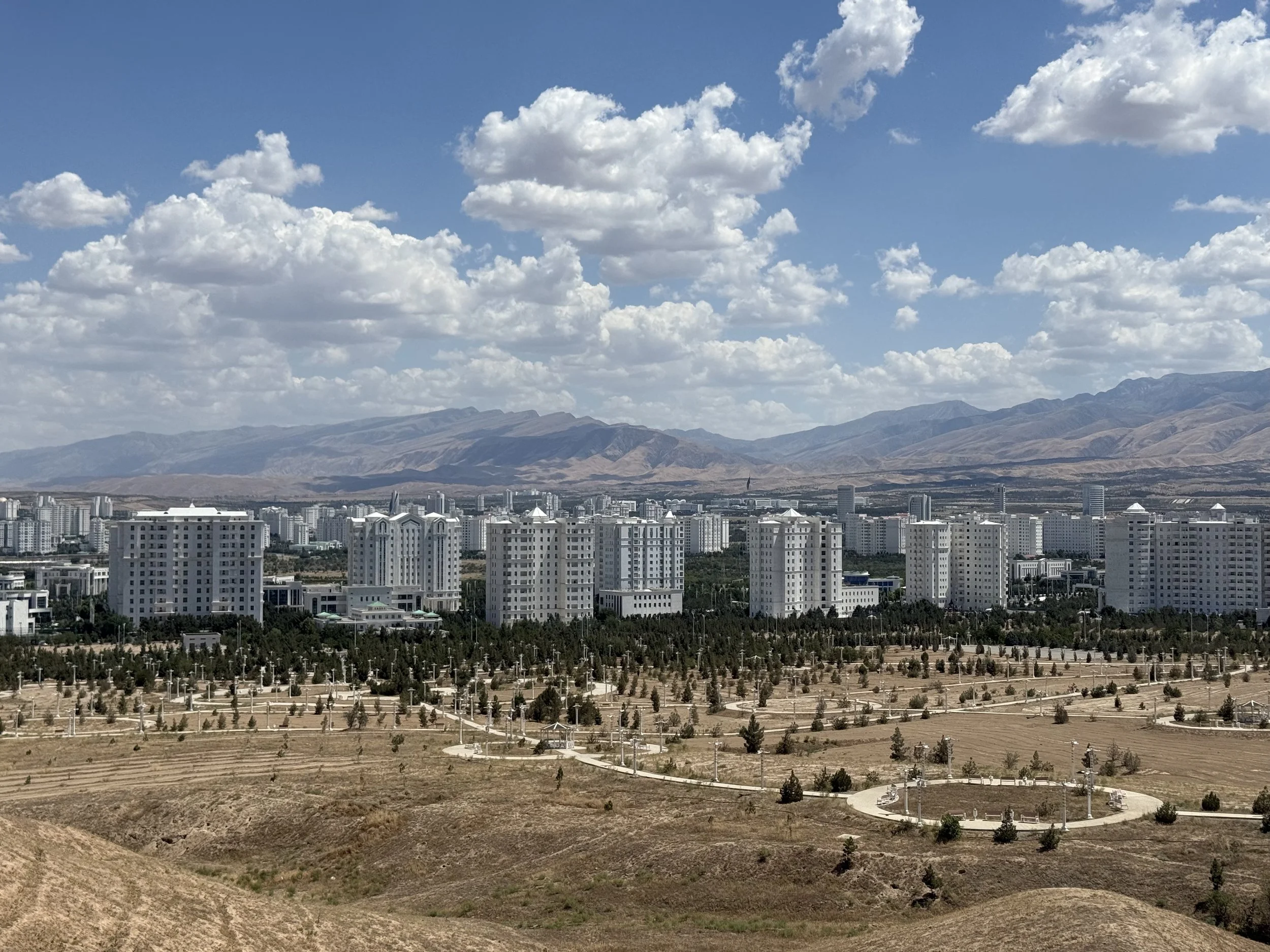
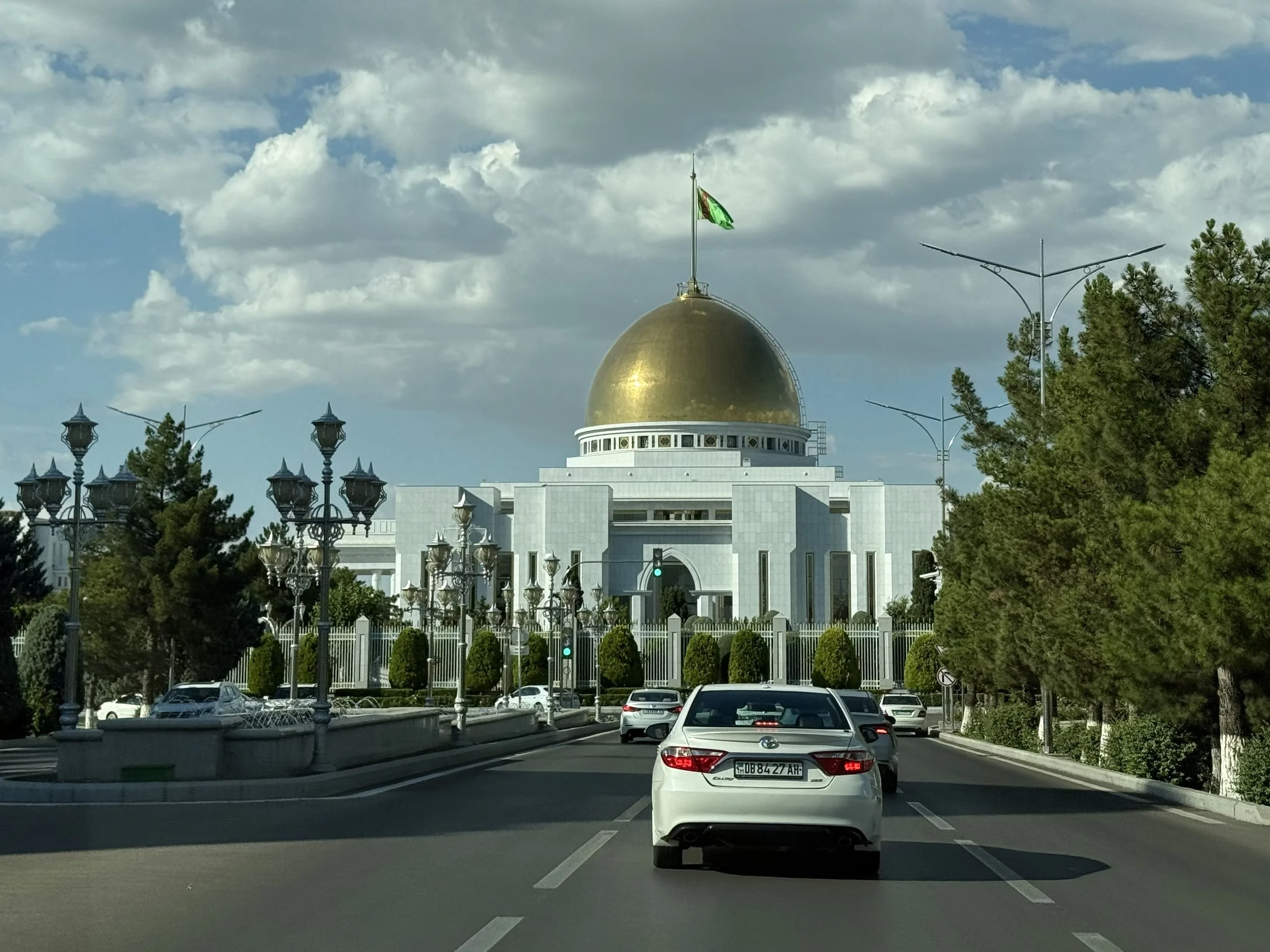
The transition from the harsh Karakum Desert to the well-paved avenues of Ashgabat was jarring. Driving south, my driver and I entered the capital, marked by a couple of checkpoints and a visible jump in the standard of living. Soon massive white marble towers rose from every side, impossibly wide avenues carried us from one place to another, and extraordinarily opulent palaces and monuments punctuated the skyline. The government's presence seeped in everywhere in a way it had not outside the capital, in the police, the billboards, the president's image, the checkpoints. It is not an accident that the city looks this way.
Turkmenistan's modern history has been defined by a series of dictators who concentrated total power in themselves, starting with the country's first leader, who renamed himself Turkmenbashi, meaning father of the Turkmens, and built a personality cult around it, going as far as renaming the months of the year after himself and making his own autobiography required reading in schools. He poured the country's money into Ashgabat while the rest of the nation lived in poverty, and that imbalance never really corrected itself. Ashgabat now holds the Guinness World Record for the highest density of white marble buildings anywhere on earth, with 543 marble-clad buildings covering more than four and a half million square meters, enough marble, according to Guinness, to cover more than six hundred football pitches.
Our first stop was the tour company headquarters, where I was apparently expected by the head of the company, in a large marble building, no surprise. He seemed pleased to have an American visiting the country and gifted me a box of chocolates, then told me I would be provided a guide for my time there free of charge. I had opted not to pay for a guide, but did not protest. We took a photo in his office, which was outfitted, of course, with a large portrait of the president behind his desk. I later came to suspect that the tour company and the government generally prefer that tourists are not unaccompanied.
My hotel was huge, empty, and opulent in the way that new Ashgabat specializes in. The lobby was marble, adorned with a portrait of the president, and classically designed, and my room was the same. If you squinted, you could almost believe you were staying somewhere like the Plaza or the Ritz-Carlton. The hotel also provides guests with unrestricted internet access, a rarity in the country, and many Western amenities.
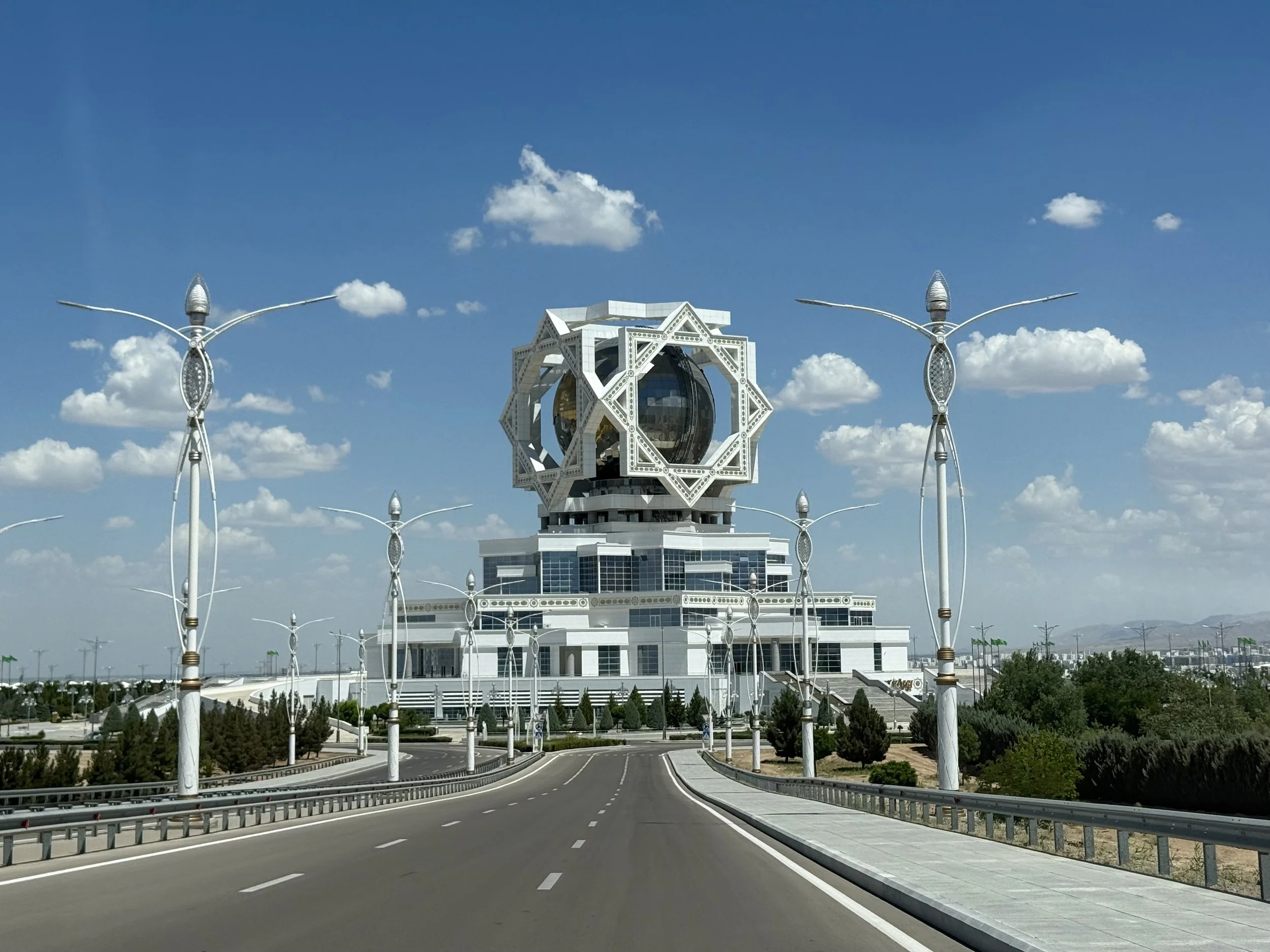
I spent the rest of the afternoon and most of the next day on a city tour with my guide and driver, starting at the National Museum and moving through a string of massive white and gold monuments dedicated to the first president, to neutrality, to independence, and more. A few things they all had in common were that they were huge, expensive, and empty, and guarded by soldiers who were very touchy about anyone getting close or taking photos. The Ashgabat Wedding Palace was the strangest and most memorable of everything I saw, an eleven-story building shaped like a giant three-tiered star where every couple in the city goes to be married.
One thing was for certain: Ashgabat gets a disproportionate amount of money and resources in Turkmenistan. Moreover, the new construction doesn’t seem to be stopping, as marble high-rise apartments are under construction all over the city. New Ashgabat is impressive, but it’s also sterile and unsettling. Walking anywhere is impractical, and the summer heat makes it impossible.
On the outskirts of the city, I got to visit the horse stables to see the Akhal-Teke horses, one of the oldest horse breeds in the world and the source of real national pride here, known for a coat that seems to shimmer gold in the sun. In a break from all the white marble, we also stopped at the World War II eternal flame and a mosque gifted to the country by Turkey.
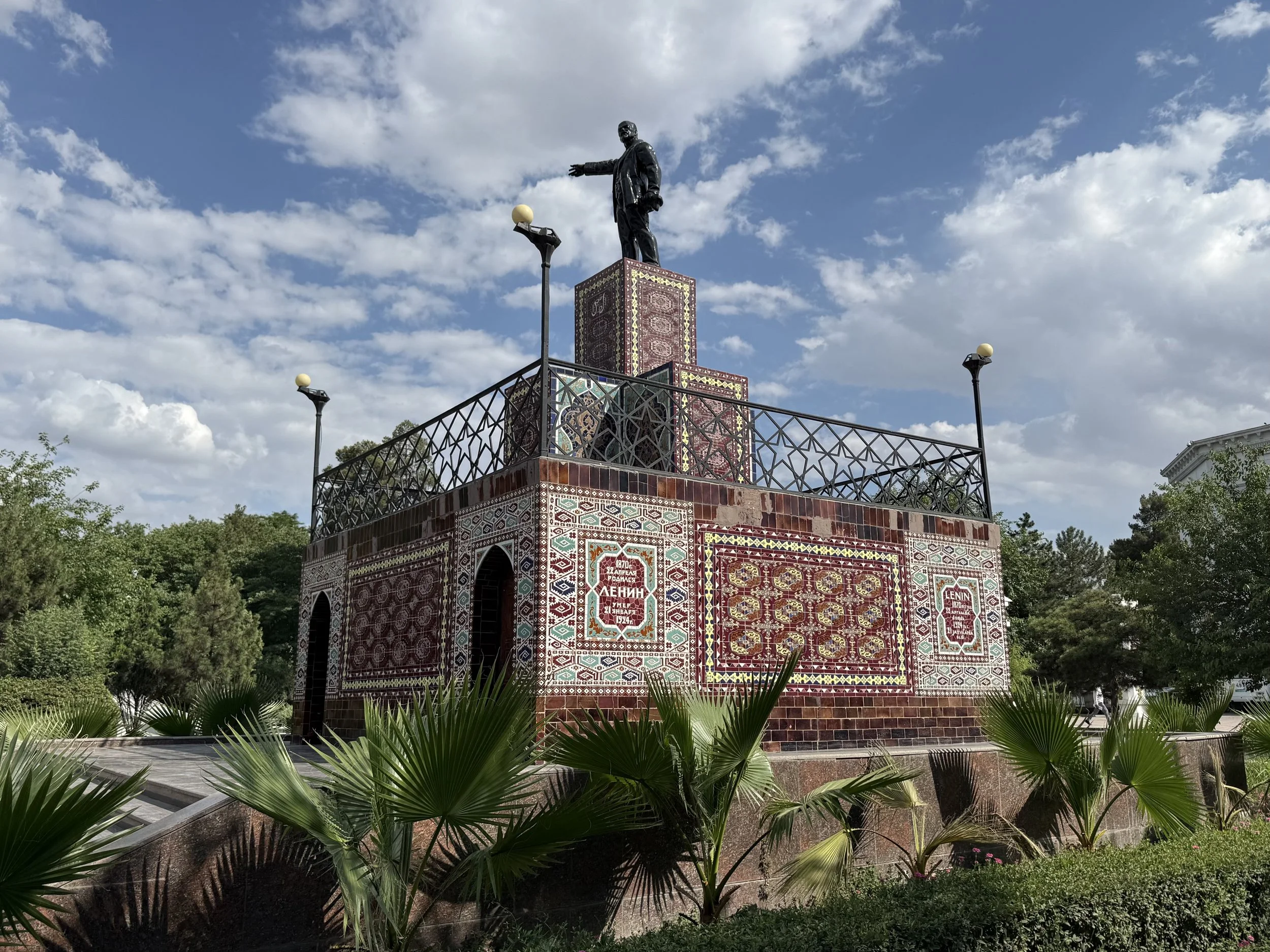
As bizarre and interesting as new Ashgabat was, my favorite part of the city by far was the older, Soviet built town. Its smaller, pedestrian-friendly streets are lined with trees and scattered with parks, and markets like Gulistan Bazaar mingle with residential districts to form neighborhoods that actually feel human. In Old Ashgabat, I was also able to resurrect some of my favorite travel pastimes, sending postcards, posing with Lenin statues (the one in Ashgabat is remarkable), and hunting for Soviet art.
Right: An ornate statue of Lenin in Ashgabat’s leafy old town
On my final night in Ashgabat, I ran into the Dutch couple I met at the Darwaza Crater in my hotel and joined them for dinner and a drink in town (and unaccompanied, to the apprehension of my guide). We grabbed a cab into town and settled on a beer garden called Berk. It’s right next to the Russian embassy, and two cars from the embassy were already in the lot by the time we arrived. The hosts also seemed fairly shocked at our arrival and agreed to seat us in the end, but not without first denying me the WiFi password.
Old Ashgabat, Soviet Remnants
A few spots worth the walk, away from the marble
From the look of it, we were the only Westerners to have shown up there in a while, and between that, a poster celebrating the Soviet victory in the Second World War, and the general atmosphere of the place, the three of us joked that we had wandered into a Cold War spy film. I bought a Soviet pressing of Stairway to Heaven on vinyl from our cab driver on the way back. Before bed, I made use of the hotel's spa and sauna, ahead of a long drive west to Turkmenbashi the next morning.
If you go…
A registered tour agency and a letter of invitation are required to enter Turkmenistan at all, and a guide is often included whether you ask for one or not
Expect close attention around monuments and government buildings, and ask before taking photos of people or military and government buildings
Set aside real time for the old Soviet town, not just the marble new city, since it is where Ashgabat actually feels lived in
Berk beer garden near the Russian embassy is a good spot for an evening that feels like a genuine local scene rather than a tourist one
Arcabil and Yyldyz are the only hotels in Ashgabat offering unrestricted internet access (no VPN needed)
Getting a local SIM or eSIM is a bureaucratic and lengthy process if it's possible at all, and probably not worth it for short stays
The local Turkmen Manat is traded at a black market rate of around 18-19.5 per USD; never exchange at the official rate of 3.5
