Dushanbe: A Tale of Two Cities
Dushanbe, Tajikistan - June 2026
I flew into Dushanbe in the evening from Tashkent, and the flight itself was a treat. The Pamir Mountains were lit from the side by the setting sun, with snow on the highest ridges, which ensured that my face was glued to the window for at least half the flight. As we landed, I spotted Dushanbe, with its wide boulevards and enormous blocks laid out in a typical planned city style. Both come from the same fact, which is that Dushanbe is a very young city. Its name means Monday in Persian, after the a Monday bazaar that gathered there each week when it was little more than a market town. As late as 1920, the settlement held about 3,000 people, and by 1924, after the upheavals of the Bolshevik takeover, only a few hundred remained. That year, the Soviets made it the capital of the Tajik SSR and began to build it up. From 1929 until 1961 it was called Stalinabad, and unlike Tashkent or Bukhara, it has no pre-Soviet old town to wander, because there was never much there to preserve.
In the morning, I took a cab West of the city to Hisor Fortress, which gave me the longer view that the capital cannot. People have lived at Hisor for well over 2,000 years, and the settlement passed through the hands of Persian empires, Alexander’s army and the Emirate of Bukhara before the Red Army arrrived in the early twentieth century. What remains is a restored gateway and the ruins around it, and from the top you can see across the Tajik countryside to Dushanbe sitting small in the distance. The flat plains South of Hisor lead eventually to the Afghan border and famed town of Mazar i Sharif. On the way back to Dushanbe, I stumbled across an old Soviet bus stop colored bright yellow and with the hammer and sickle emblem, another layer in Tajikistan’s history.
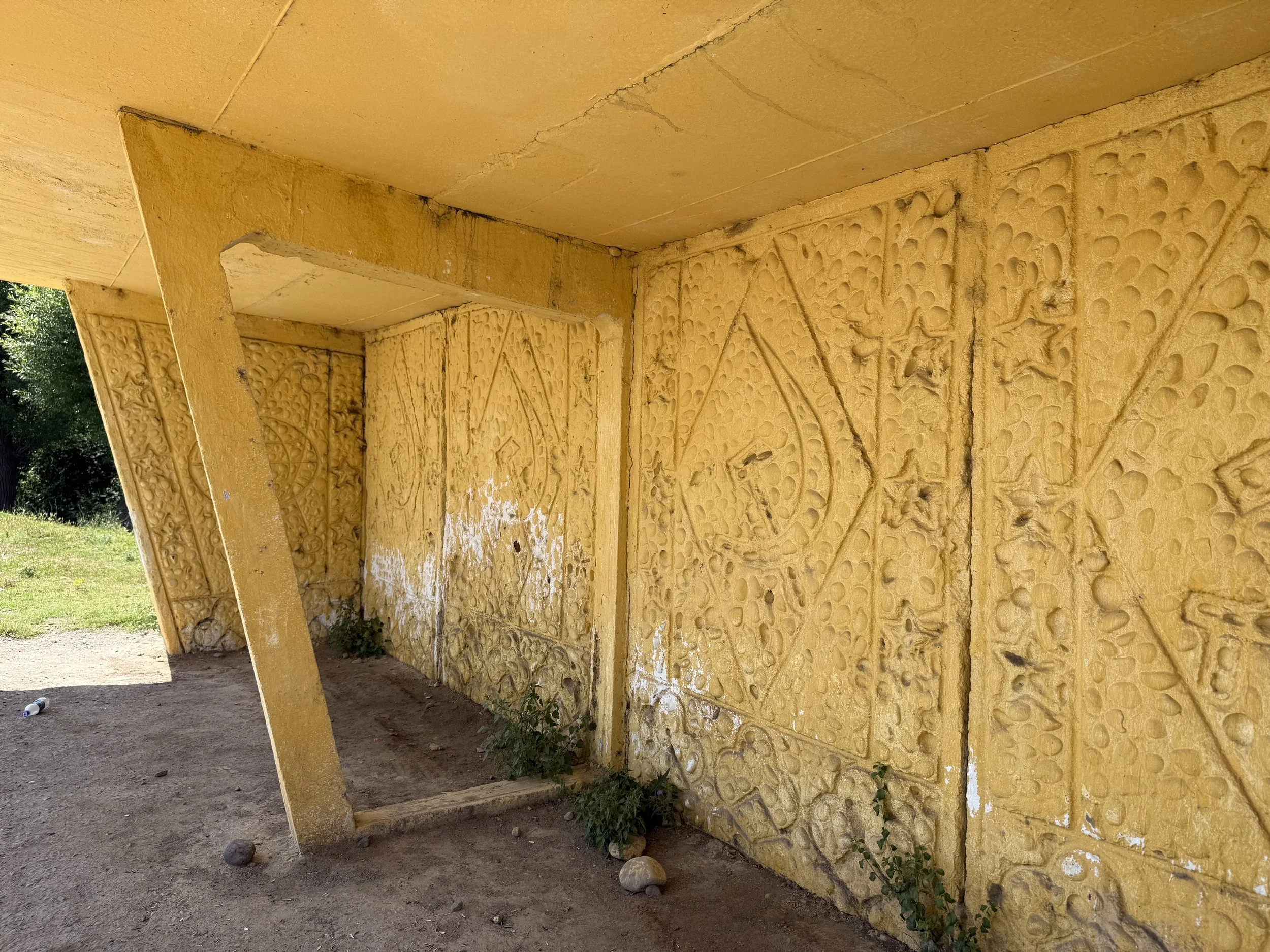
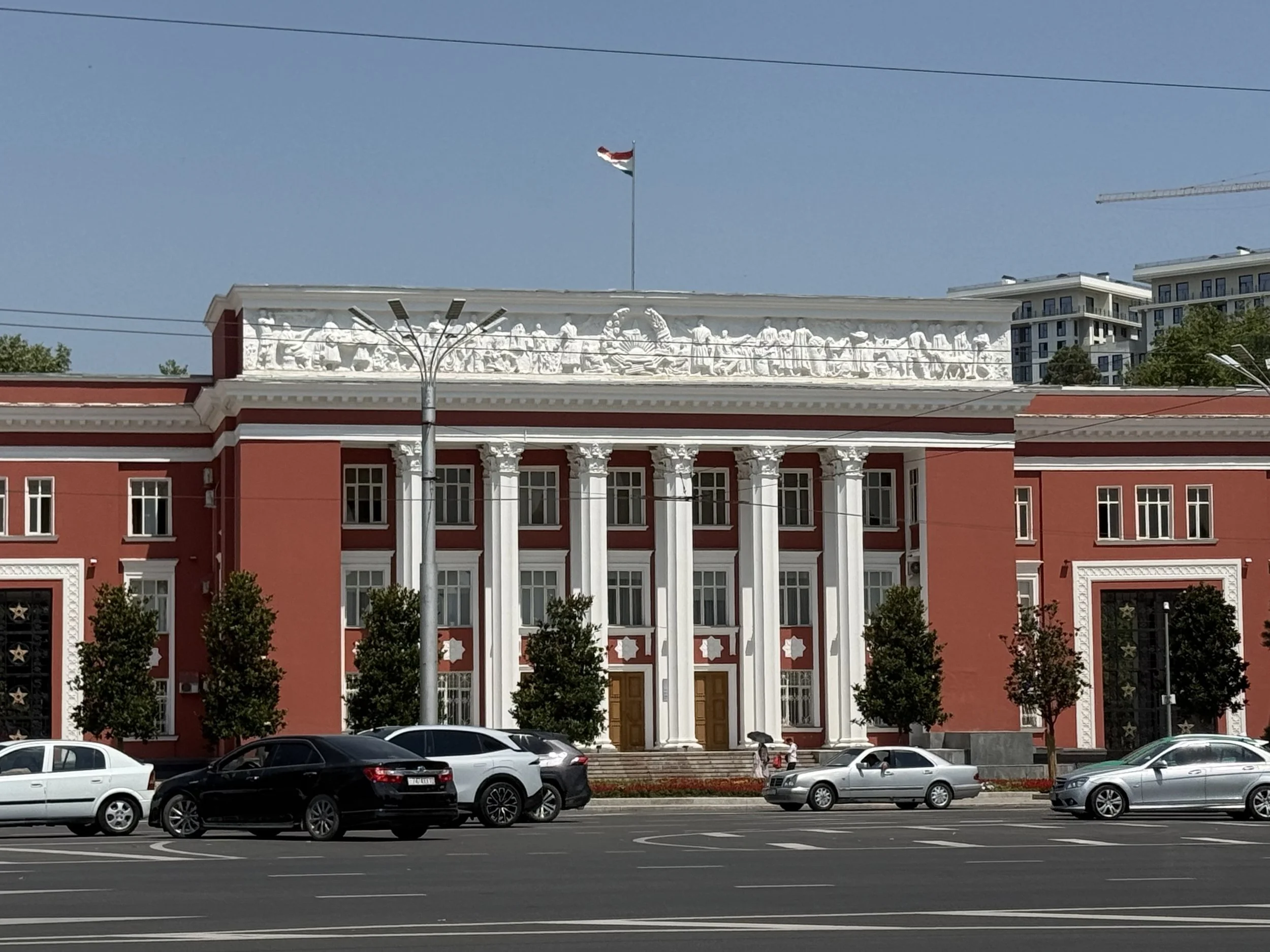
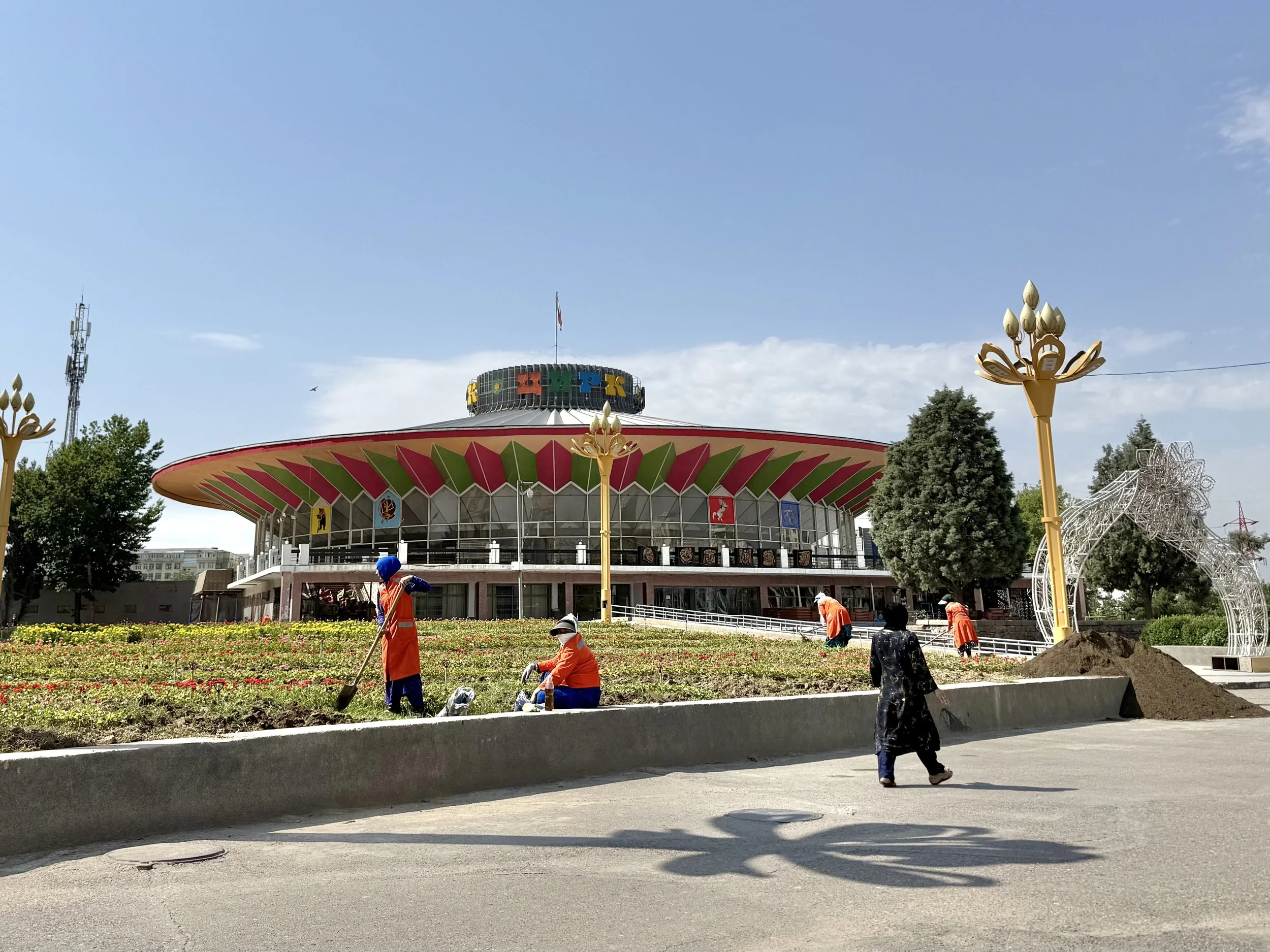
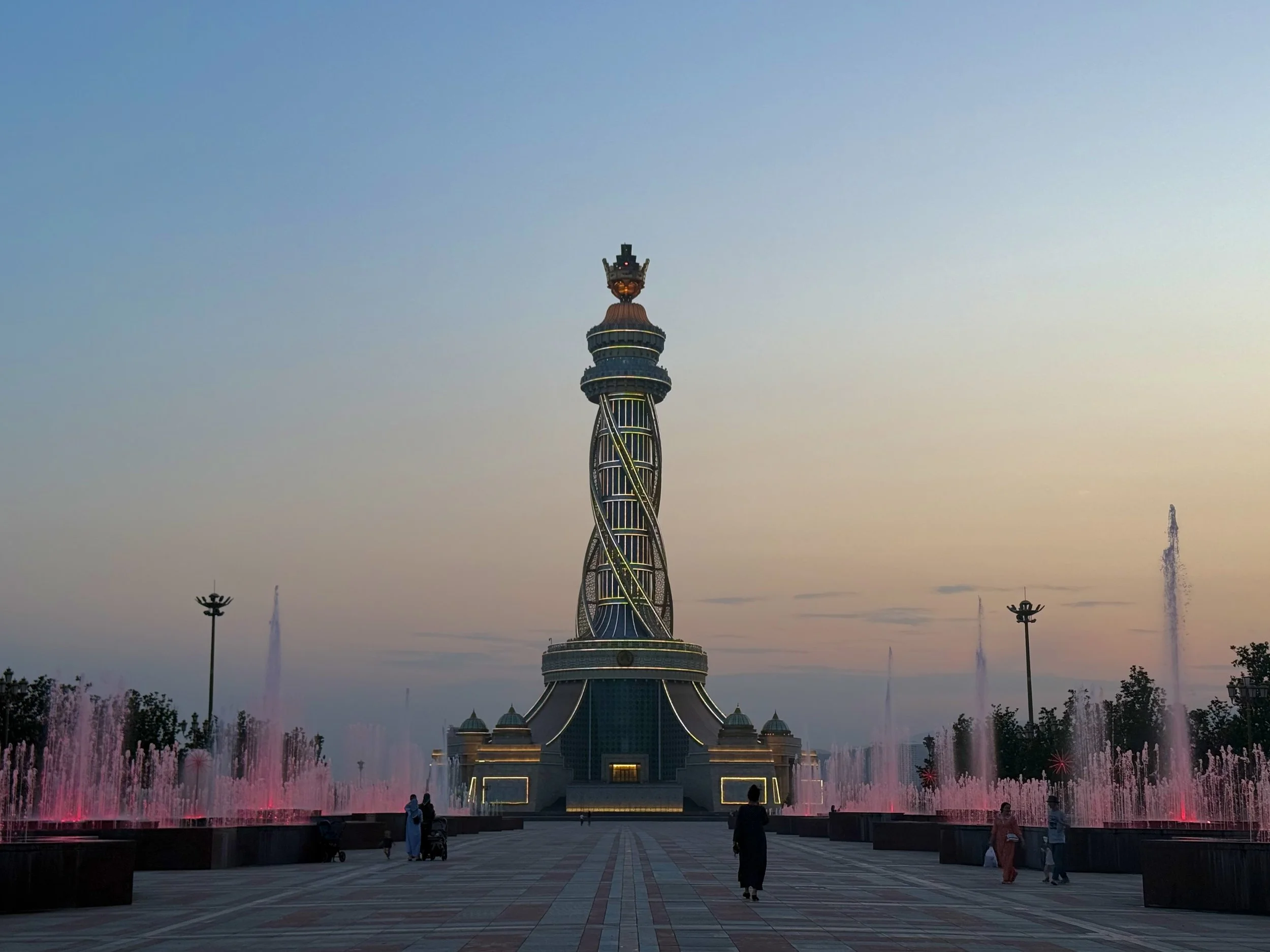
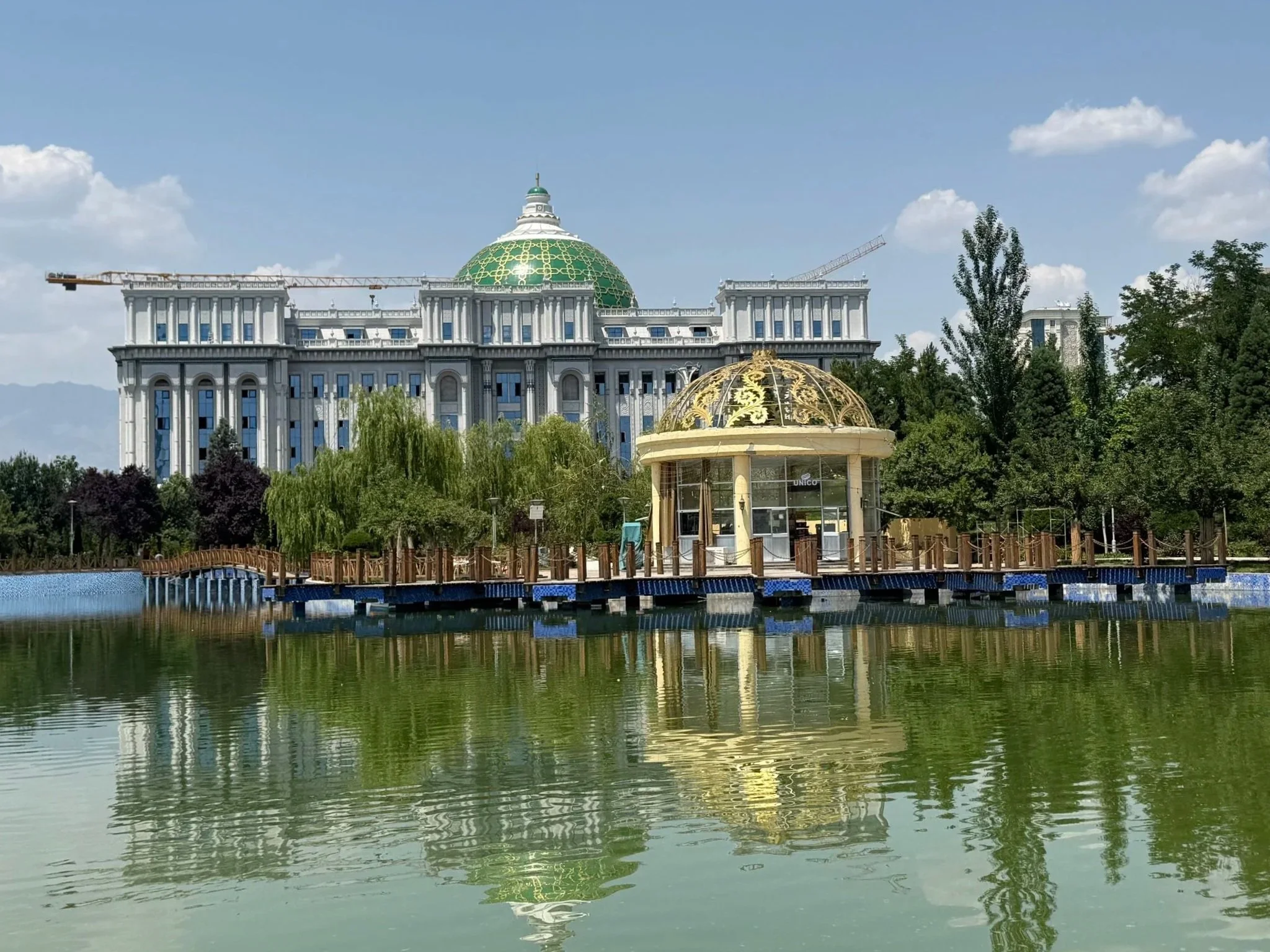
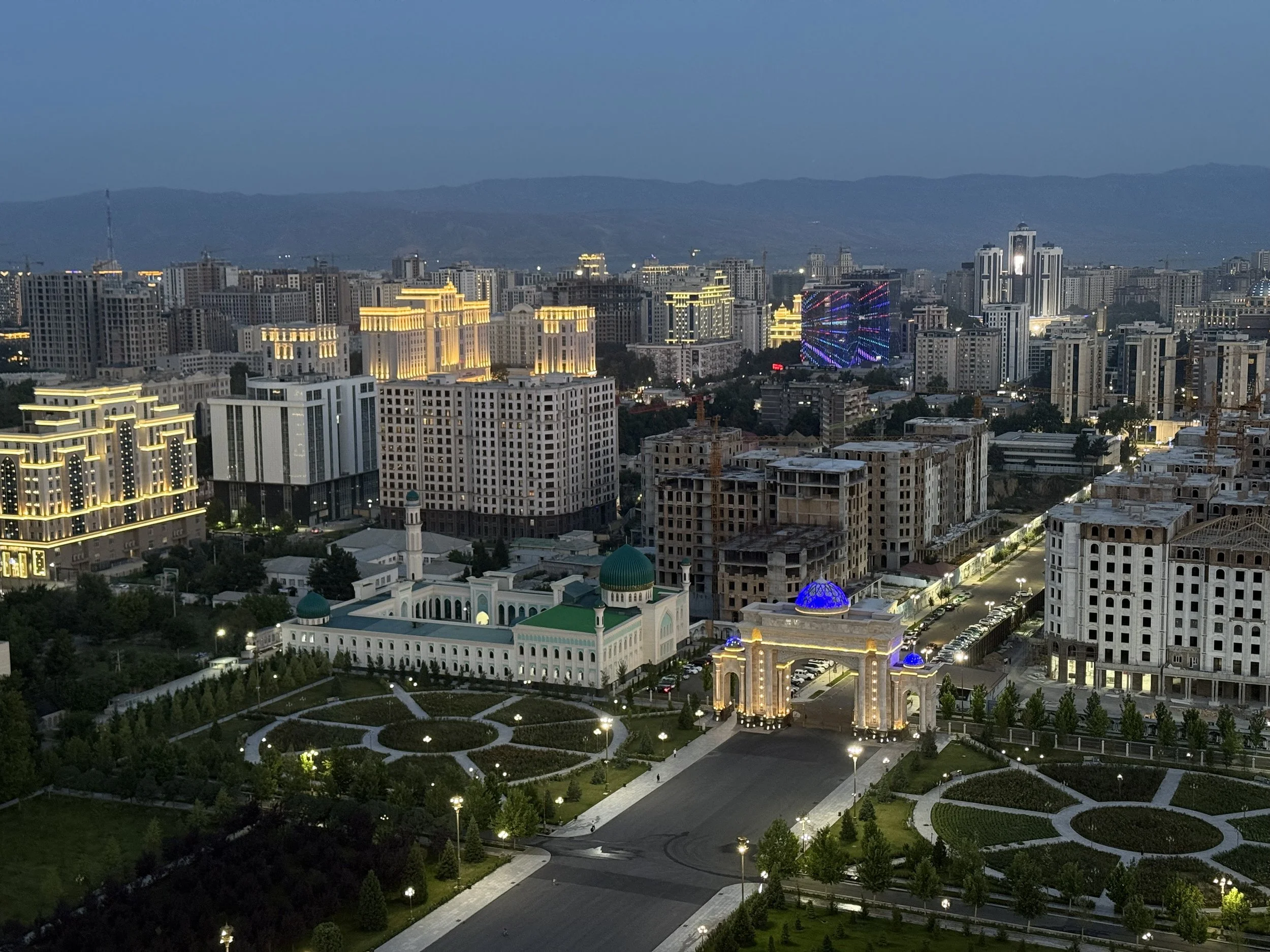
Photos: The Soviet (bus stop, government building, state circus) and modern (Istiqol Tower, National Theater, skyline) sides of Dushanbe
Back in Dushanbe, I walked Rudaki Avenue, the tree-lined main street, and the first impression is of two cities sharing one grid. Some blocks are green and shaded and lined with Soviet buildings that have aged into something adjacent to charming. One of my favorite Soviet mosaics is on the children’s theater, and the state circus (which looks like a colorful UFO) is one of the most playful buildings the Soviets ever put up. Other blocks belong to the present, with marble ministries, towers, shiny apartment blocks and palaces. The presidential palace, finished in 2008, is the grandest of them. It stands on the site of a former synagogue complex that the government demolished in 2006 to make room for it, a story that tells you something about whose interests the new Dushanbe was built around.
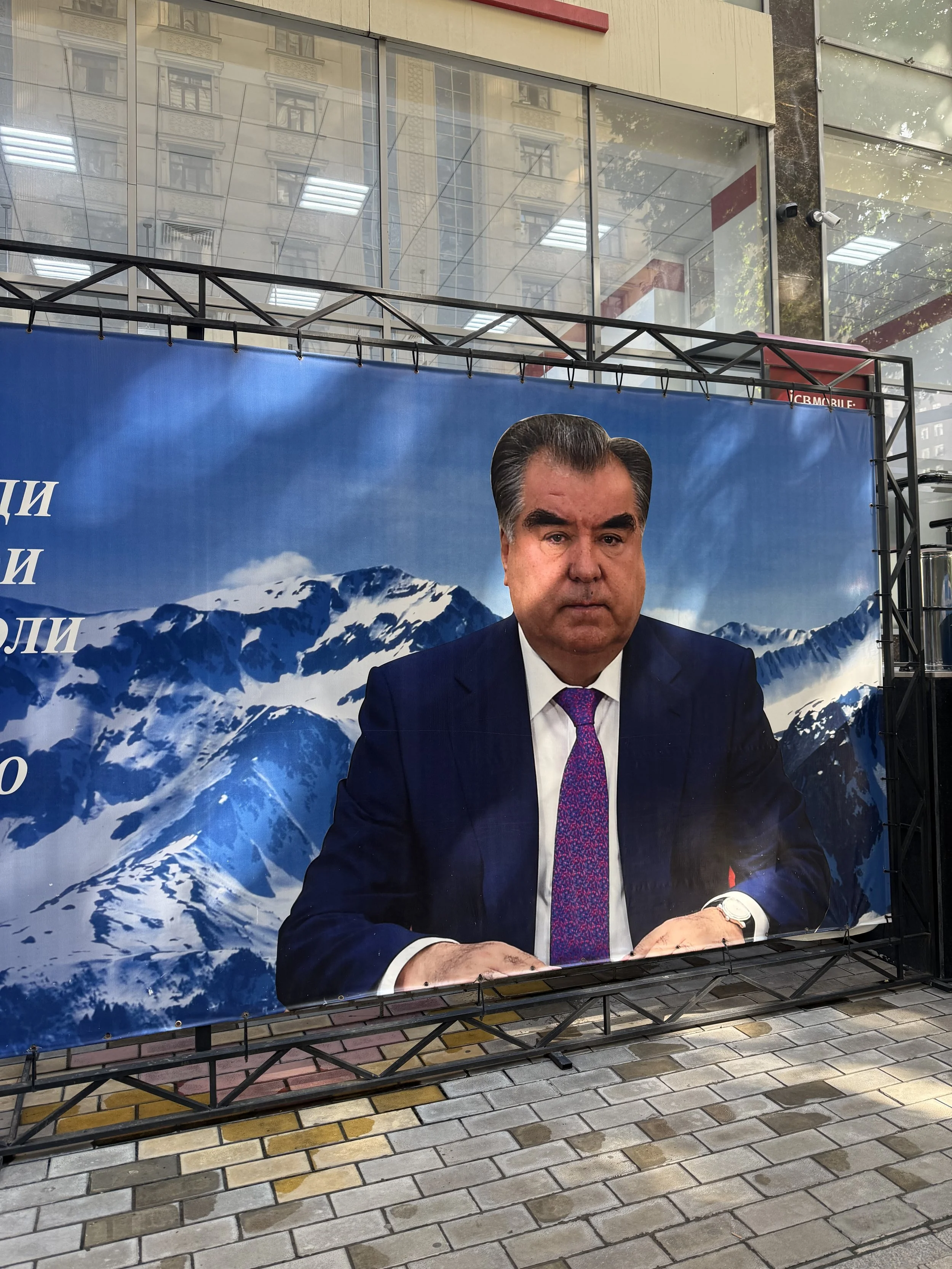
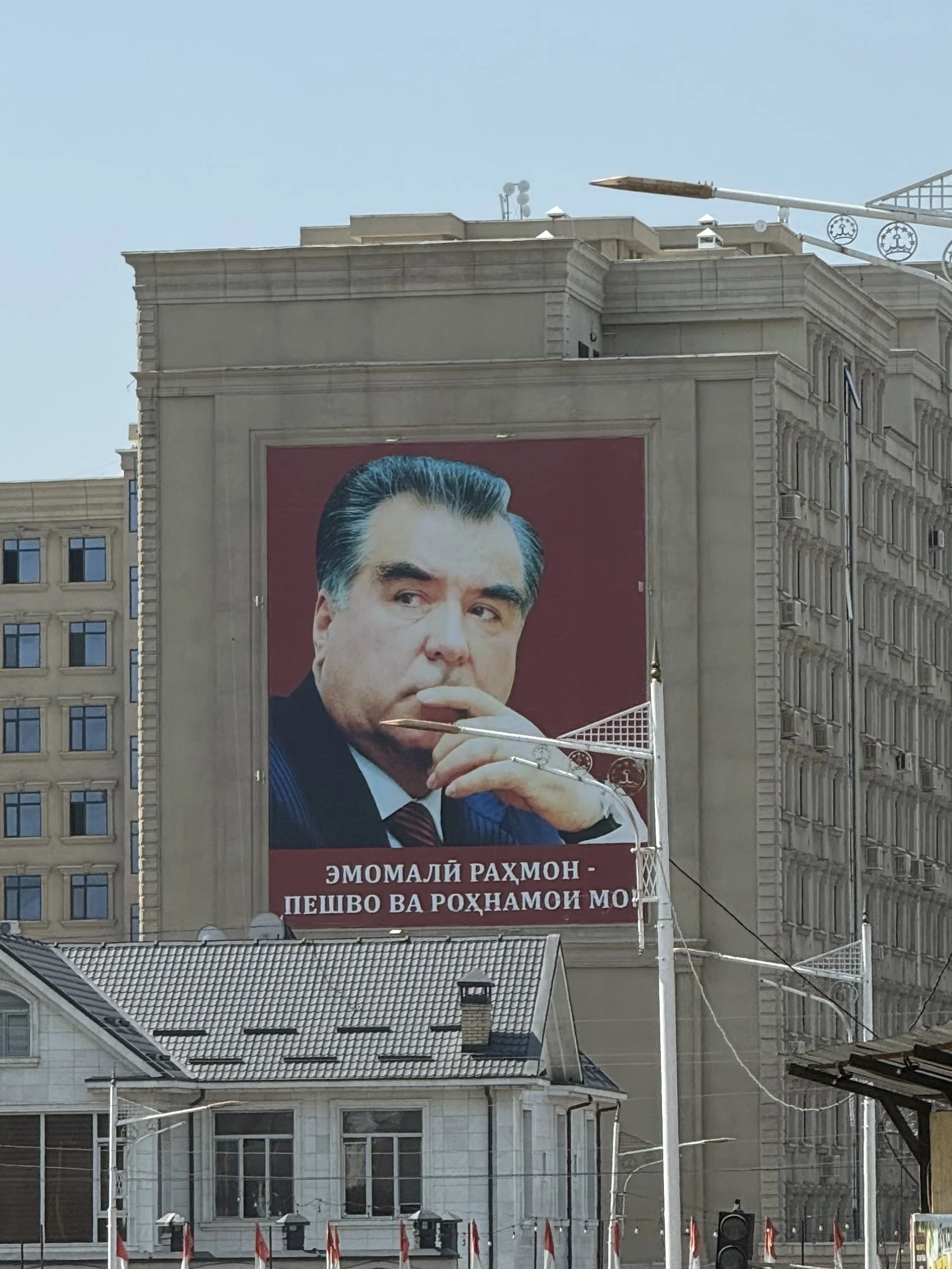
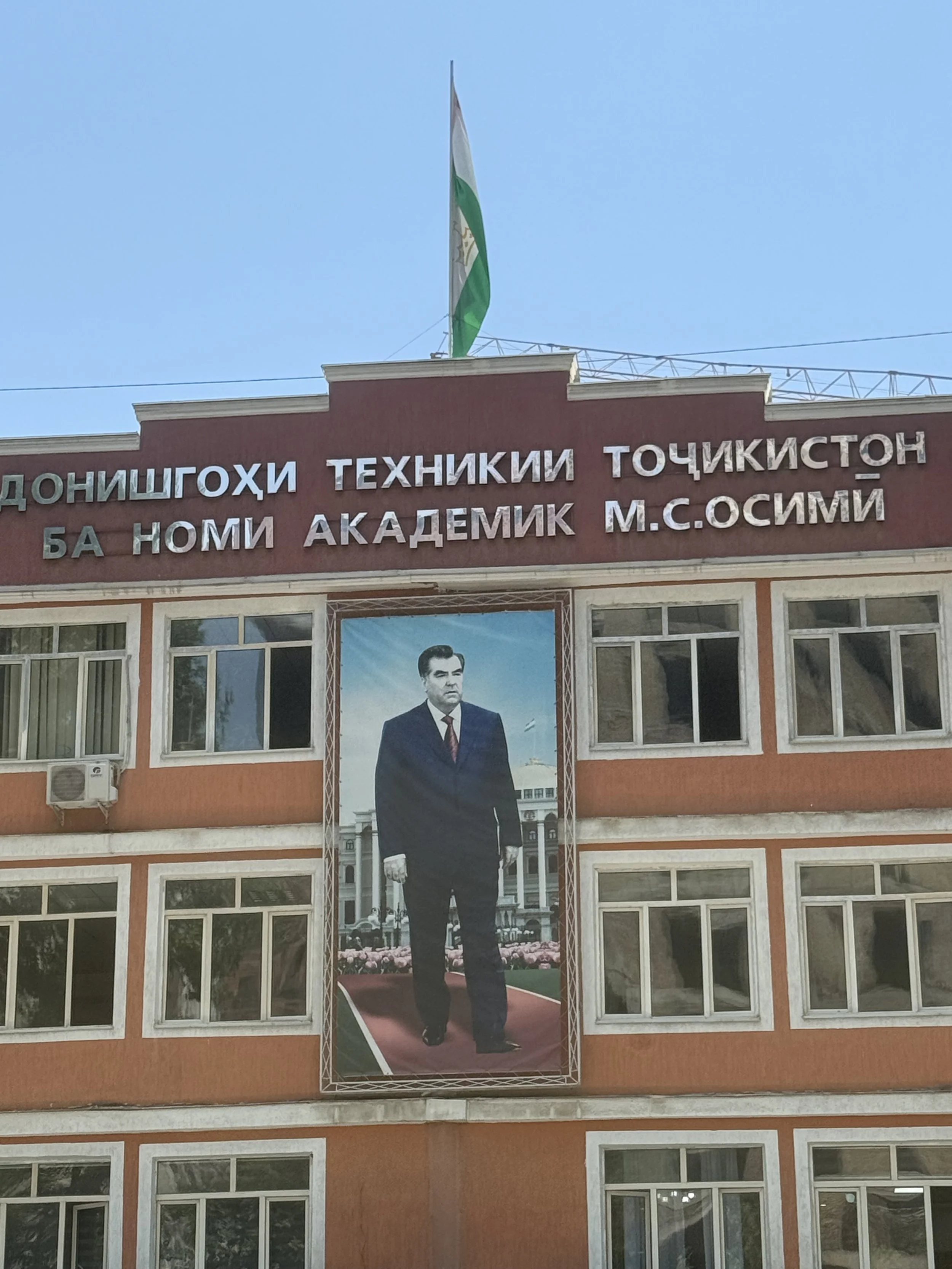
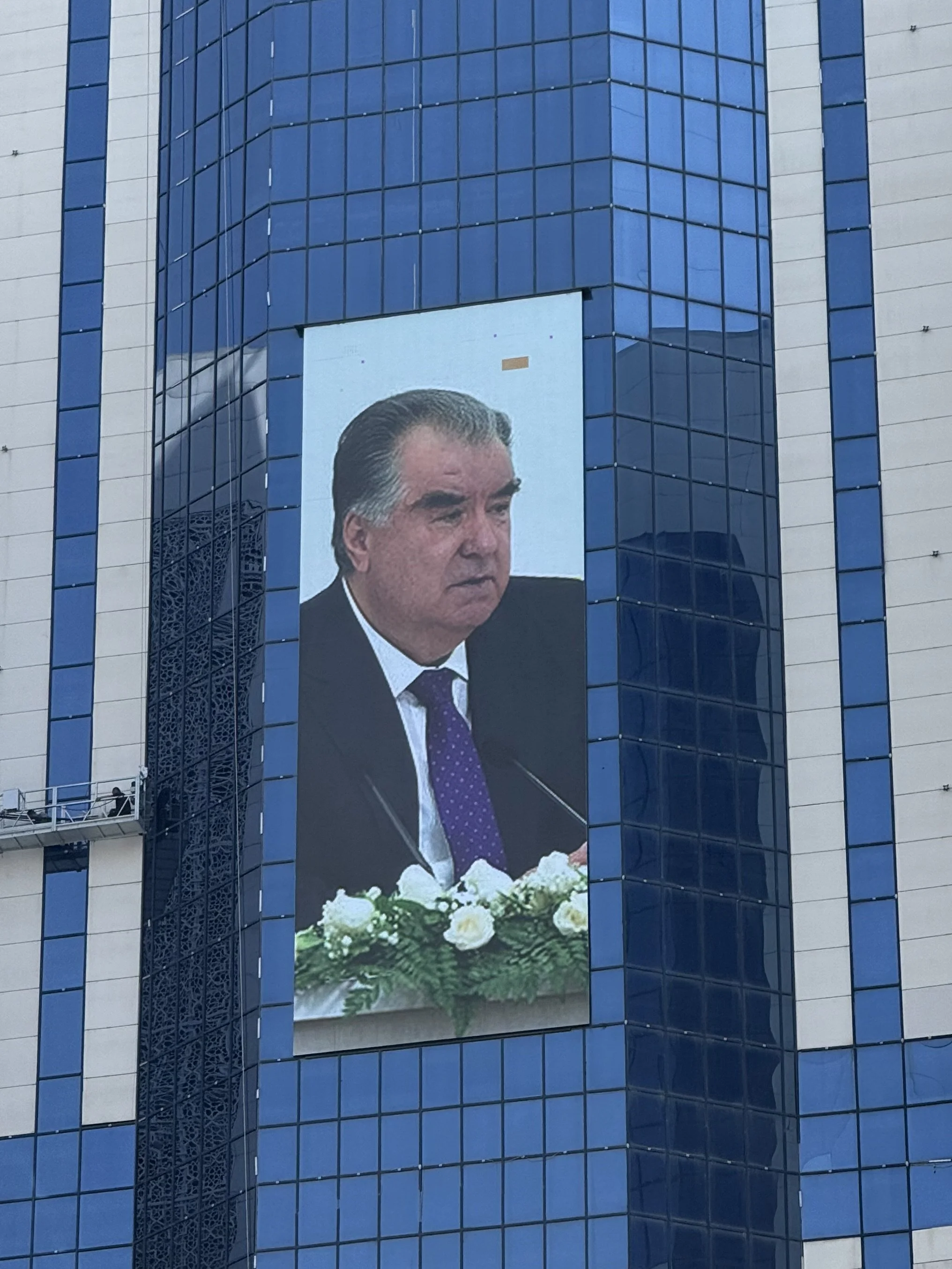
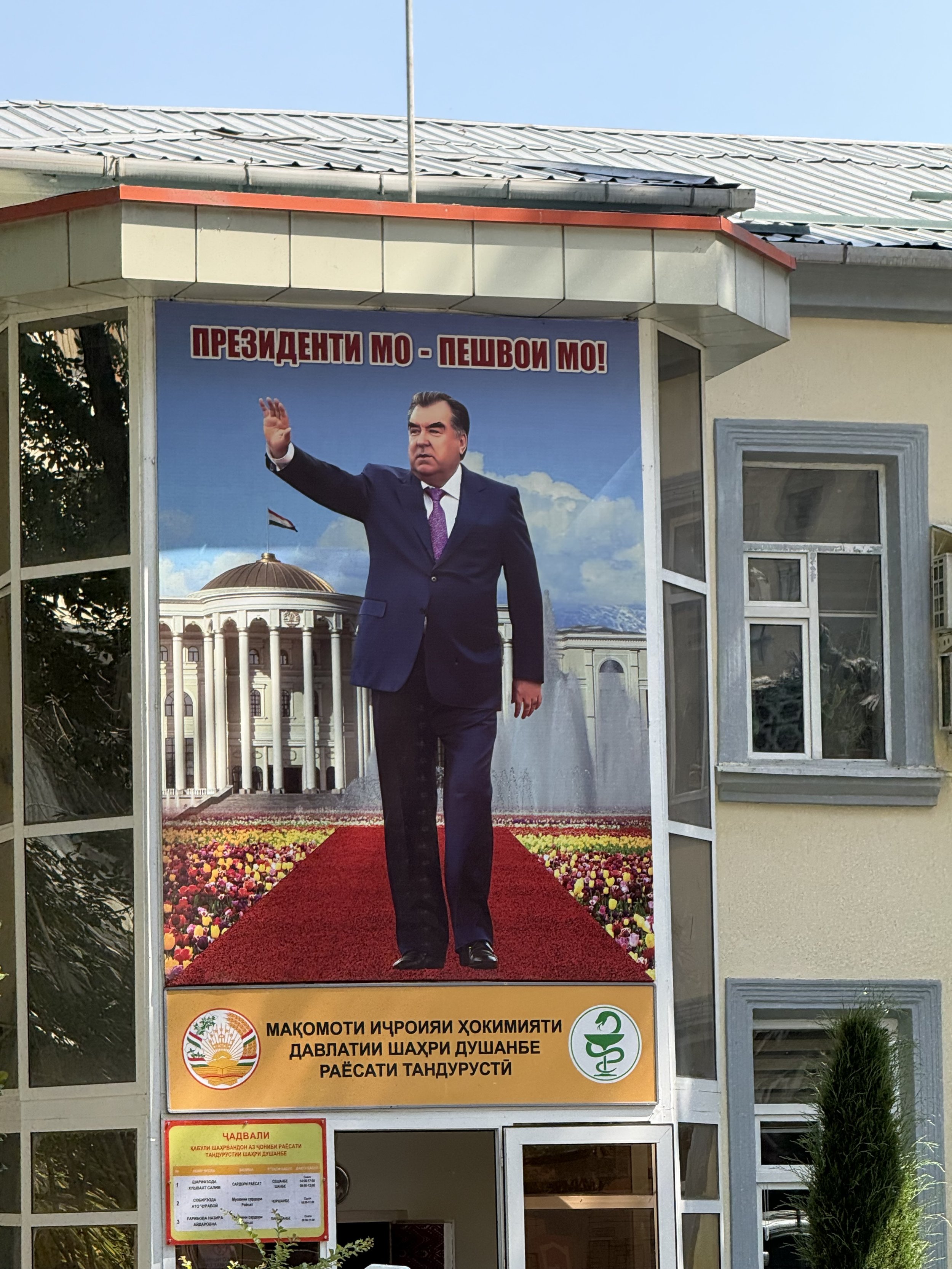
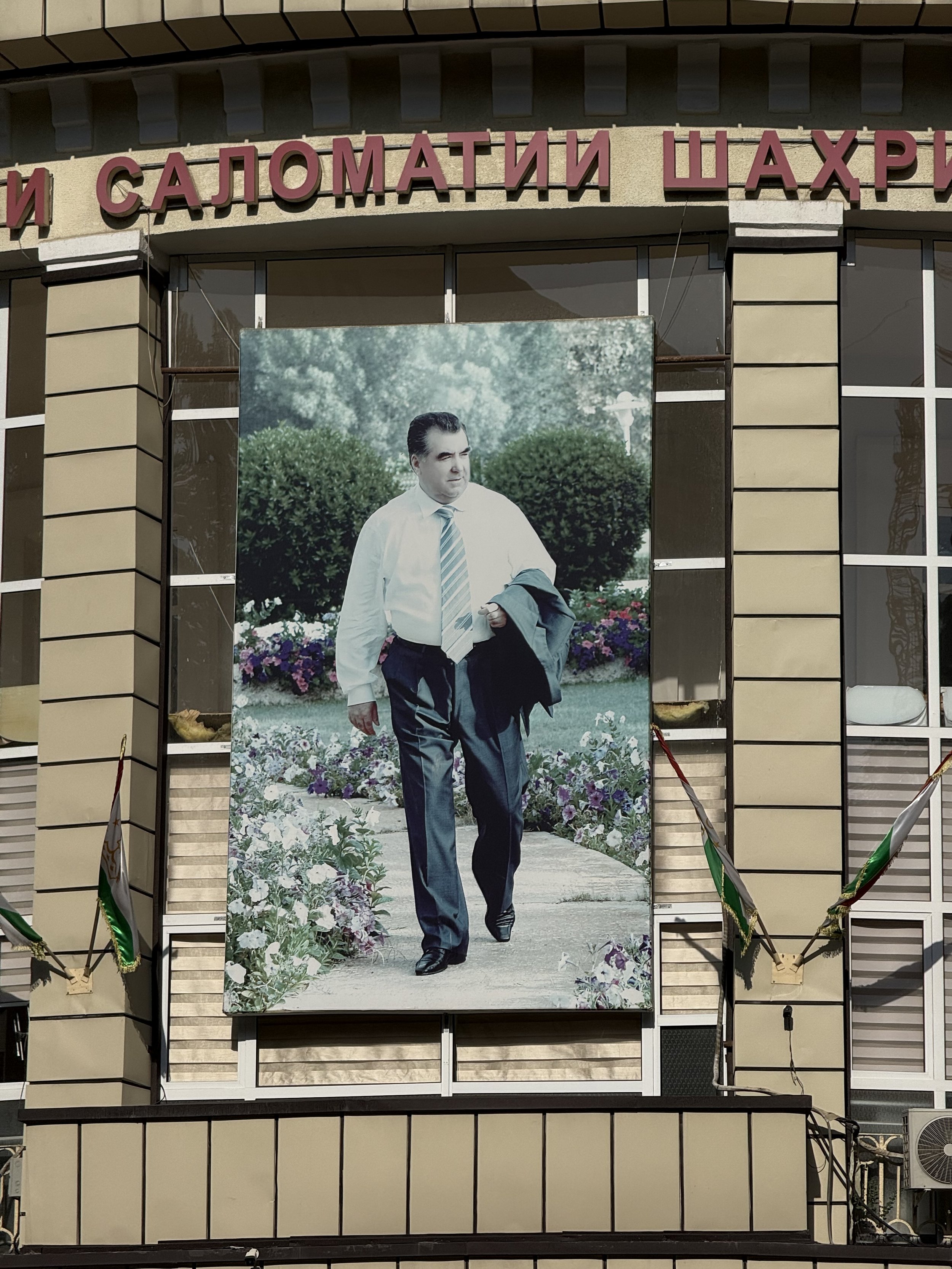
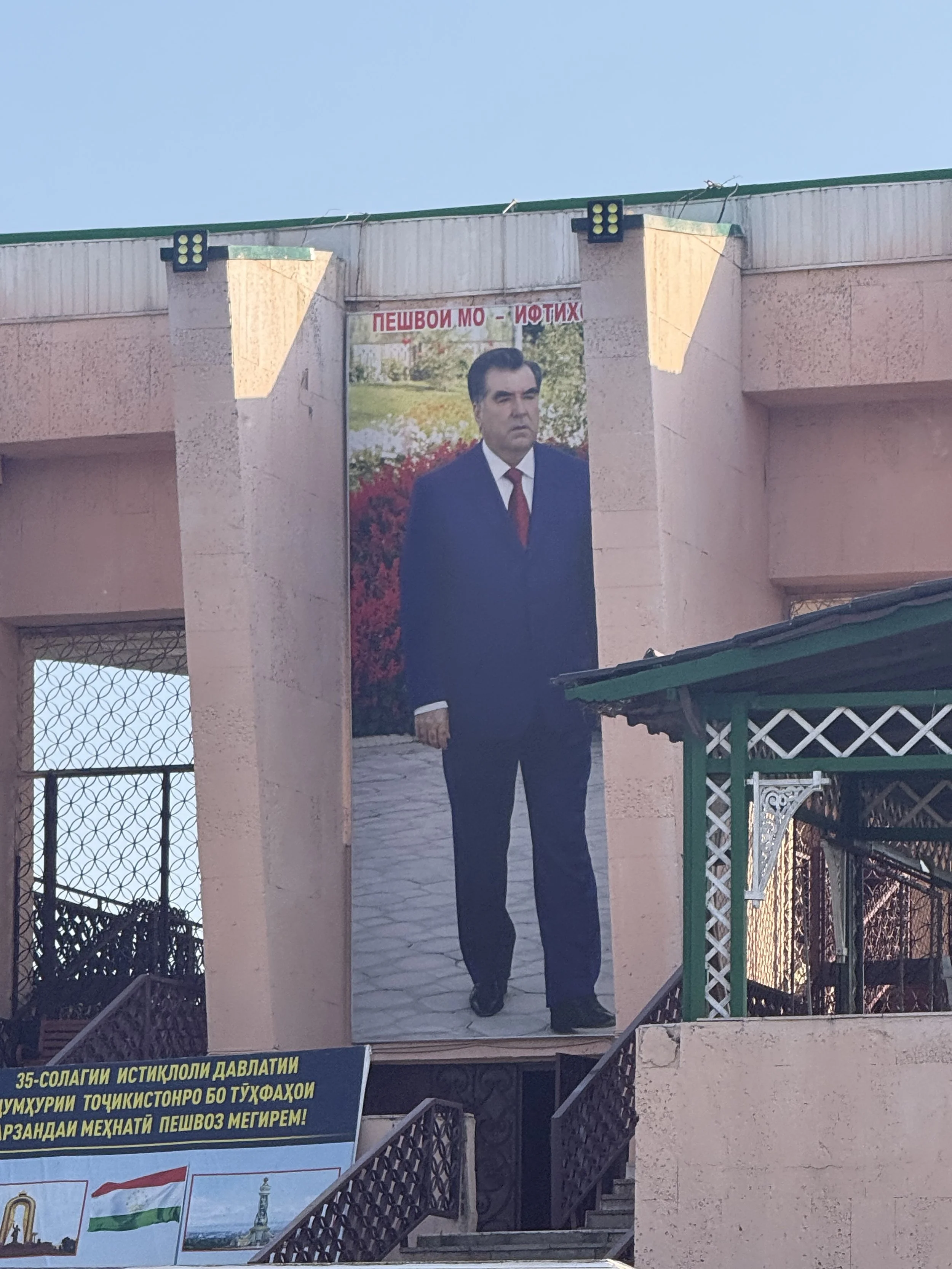
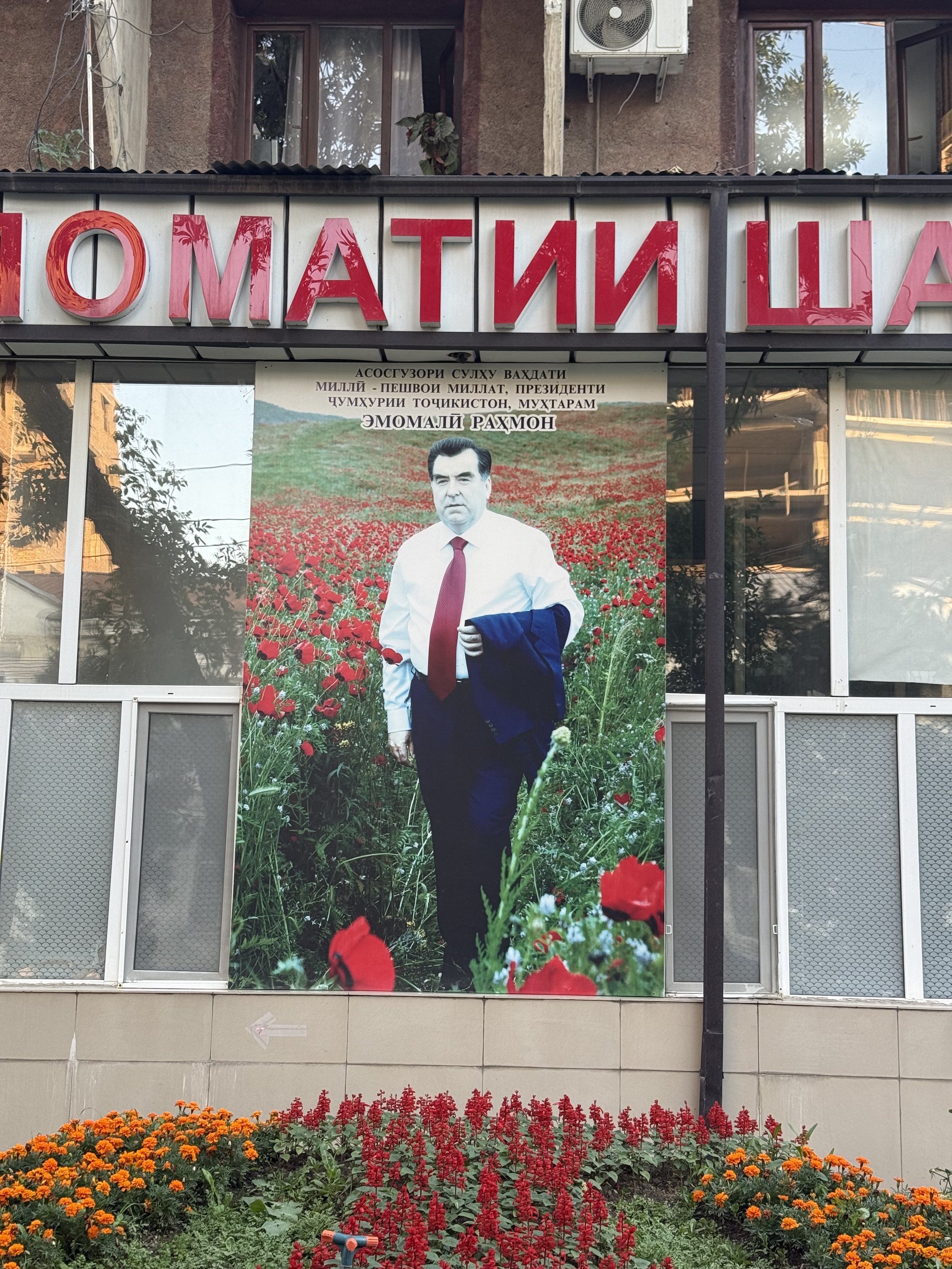
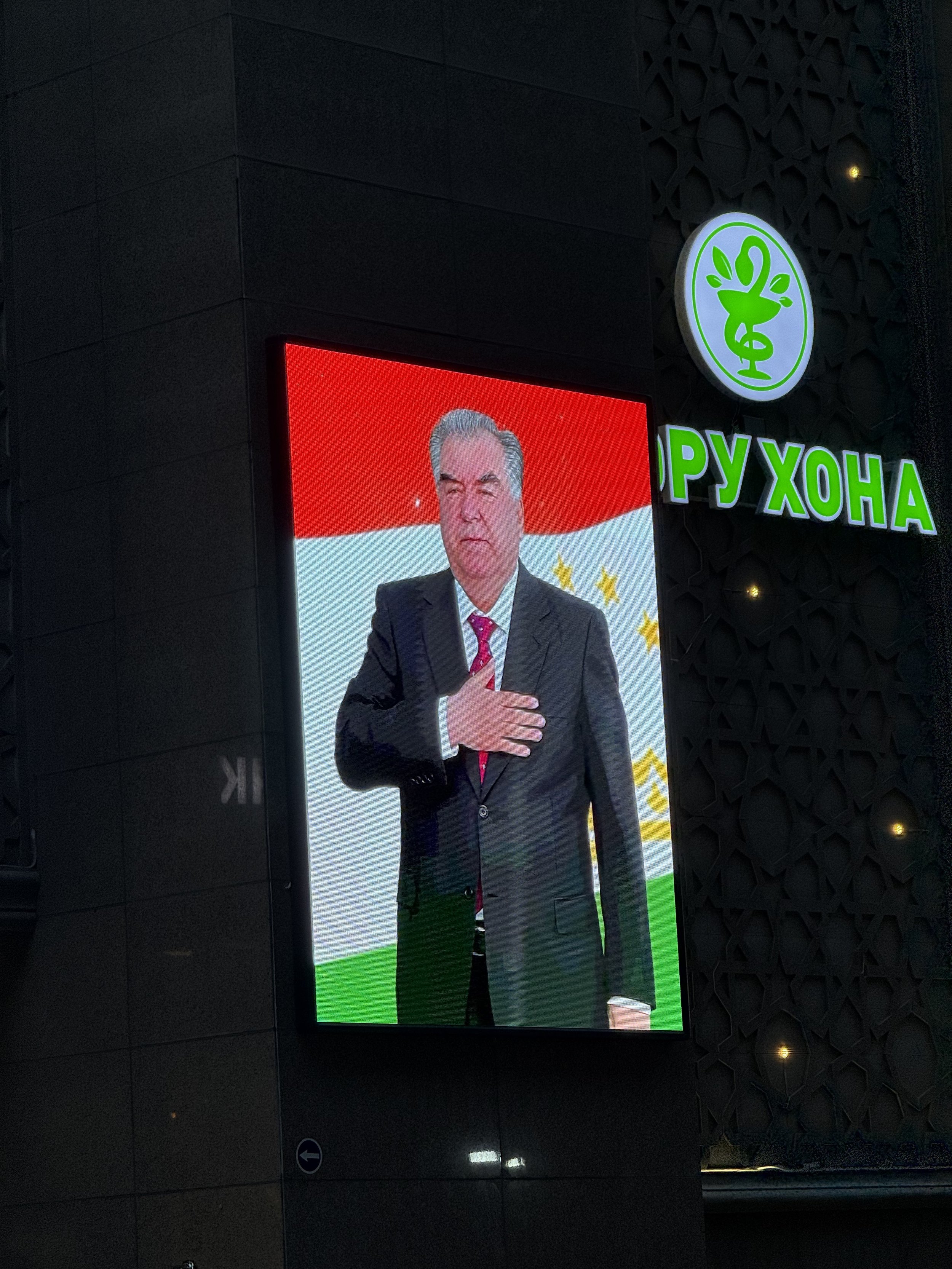
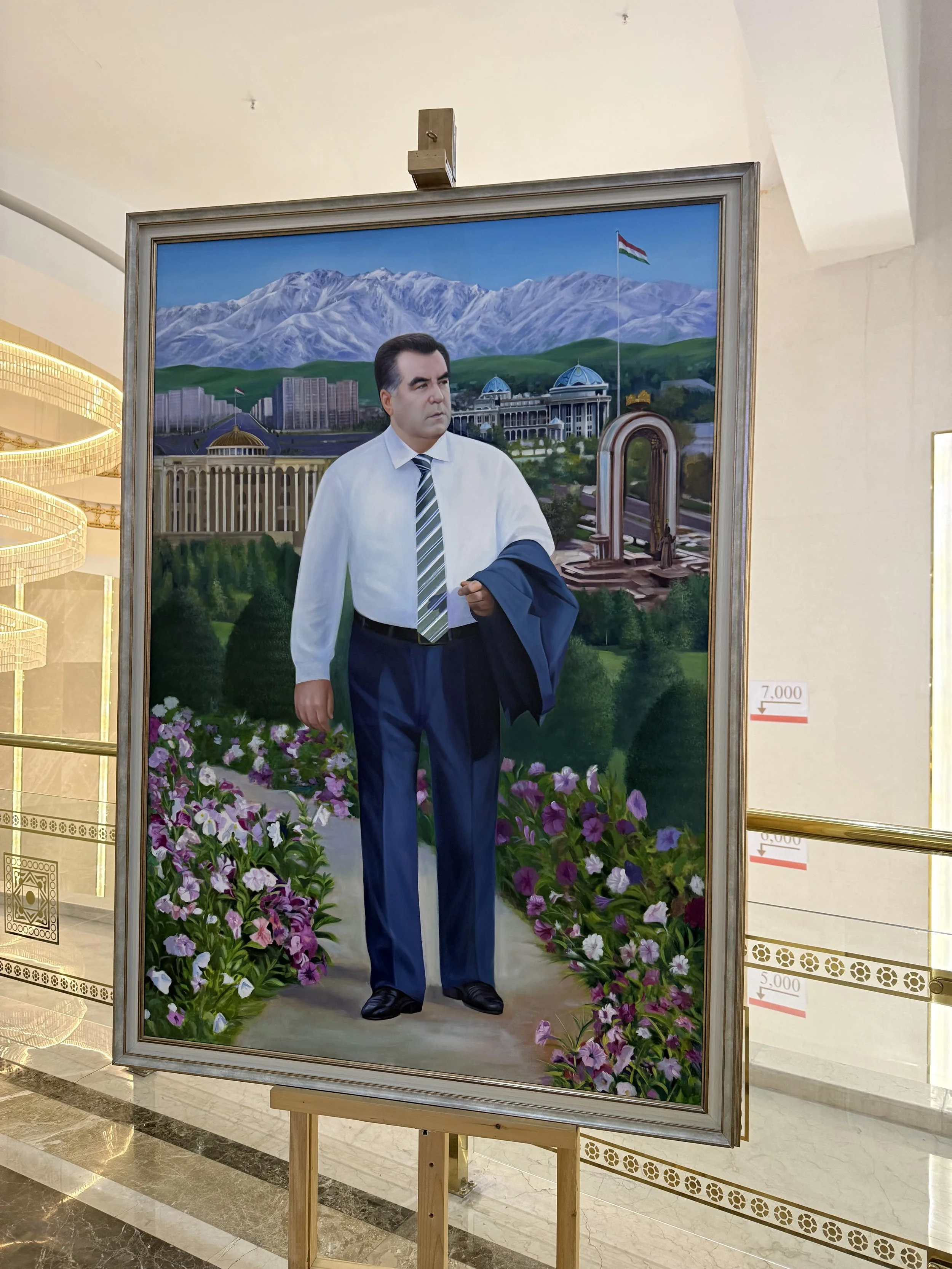
Photos: The president’s image is ever present in Dushanbe
The city’s new construction, the project of long-time president Emomali Rahmon, is absurd even for a country as corrupt as Tajikistan. Most ministries are housed in massive marble buildings and palaces, not to mention the gold-domed presidential palace. One thing both old and new buildings have in common is that they are plastered with the face of the president, who can be seen on shopping malls, government buildings, offices, and schools.
However, nothing beats Istiqol Tower, a monument to the country's independence. In the middle of an impossibly large park and flanked by truimfal arches, the tower cannot be described using any established architectural language. All I can really say is it’s tall and over the top and I don’t know how whoever designed it came up with that. I was able to go up the tower and inside (the inside looks like a luxurious but tacky hotel lobby), and the views of Dushanbe are beautiful, especially at sunset.
In the evening, I walked up to Victory Park, past an old cable car and up a green slope that left the flashy city behind. The memorial complex dates from 1975, and it is the largest and best kept Soviet war memorial I had seen so far, with bas reliefs of battle scenes, a granite wall, an eternal flame and a Red Army tank. Every Soviet city has one of these, and I keep returning to how central victory in the Second World War remains to Russian identity and how plainly that carries through Central Asia. Standing there, I noticed that this was the one place in Dushanbe that felt built for the people who lived there, rather than for an audience.
Tajikistan: Elections Without Change
Tajikistan holds presidential elections, and the same man has won every one held since 1994. Scroll through to see how the rules around him changed.
Who holds what
Dushanbe has many pleasant places, but the city itself left me uneasy. Aside from the total lack of cohesion or reason in the new construction of the city, there is a sense that Tajikistan’s people live in two worlds. There is a visible upper class in Dushanbe who drive G-Wagons and BMWs and eat at Instagramable cafes, and its hard not to see every ridiculous monument and think that the money could have been better spent on roads, public health, education, and more. Their money represents the oligarchy of Tajikistan and the massive inequality that exists in the country, and reminded me a little of the Capitol and outer districts in the Hunger Games.
President Rahmon has led Tajikistan since 1992, when a civil war was just beginning, and a referendum in 2016 removed the limit on how long he can stay. His people pay for the arrangement in several ways at once. The state restricts religion and dress, the country owes a large and growing debt to China, and about half of its GDP arrives as remittances from Tajiks working in Russia, which ties Dushanbe’s prosperity to decisions made in the Kremlin.
The next morning, I left in a shared taxi through the mountains bound for Panjakent, and the reality outside the capital turned out to be less glamorous and a good deal more ordinary. During my time outside Dushanbe, I learned that ordinary people in Tajikistan often live without access to clean water, reliable electricity, and basic public services. I hope that in the future, ordinary Tajik citizens benefit more from their country’s resources and the government spends less on vanity projects and more on its people.
If you go…
Somon Air flies Tashkent to Dushanbe, and the approach over the Pamirs is worth a window seat if the evening light is clear
Hisor Fortress is a short cab ride West of the city and works as a half-day trip
Rudaki Avenue is the easiest way to see both Dushanbes in one walk, and it connects the Soviet blocks to the new parks
Entry to the Istiqlol park is free, and the museum and 94 meter observation deck charge a modest fee
Victory Park is best in the evening, when the heat drops and the walk up the slope is pleasant
Shared taxis to Panjakent leave in the morning, and the road passes through the 5.3 kilometer Anzob tunnel on the way North
The drive itself is scenic, passing through mountain villages and under snowy peaks
